Table of Contents
Introduction
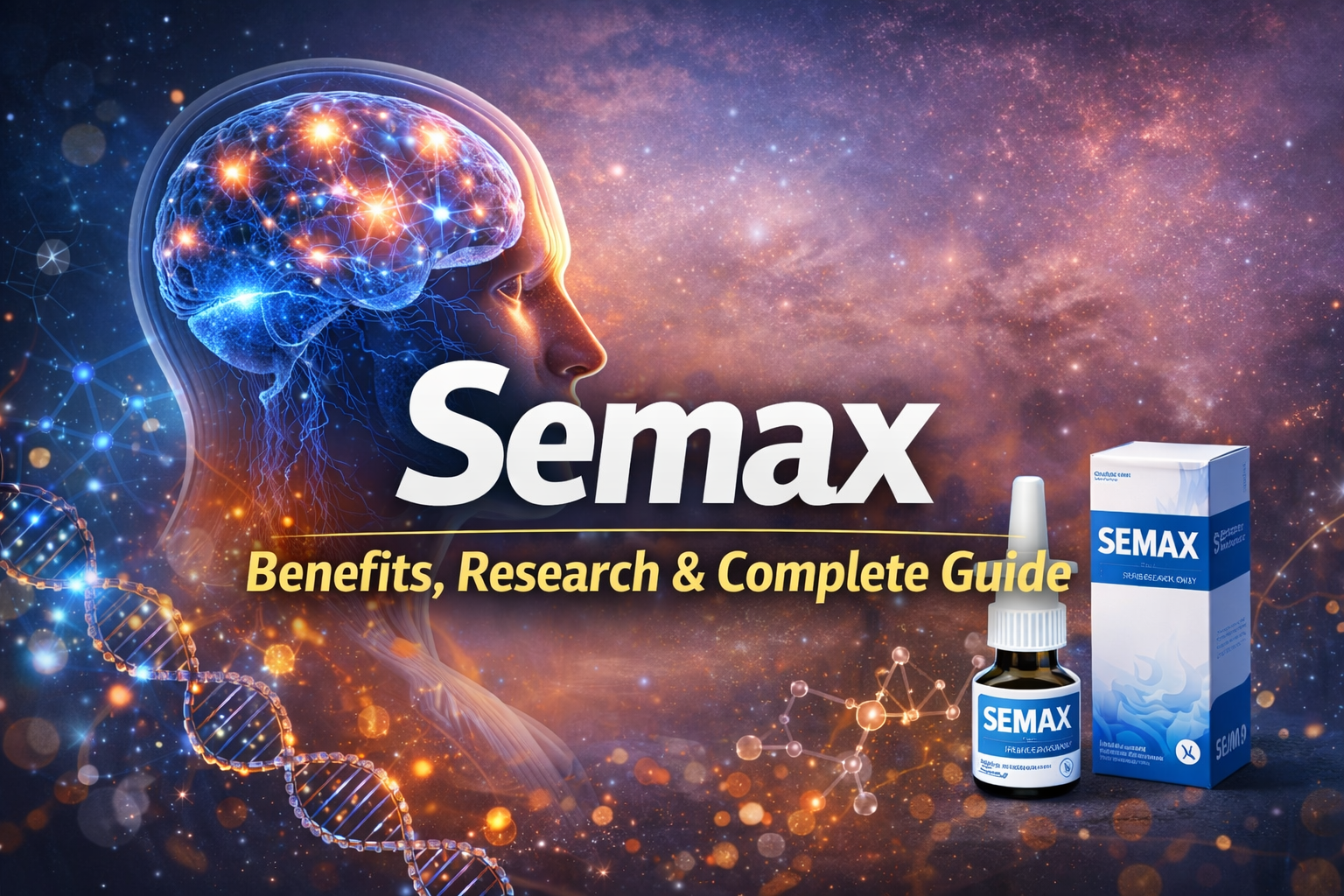
Peptide science has become one of the fastest-growing fields in modern biomedical research. Among the many peptides studied for their neurological and cognitive effects, Semax has attracted significant scientific interest due to its unique neuroprotective and cognitive-enhancing properties. Originally developed in Russia, Semax is a synthetic peptide derived from a fragment of adrenocorticotropic hormone (ACTH), specifically designed to influence brain function without triggering hormonal side effects.
In recent years, interest in Semax in Pakistan has begun to grow as awareness of peptide research spreads among researchers, healthcare professionals, biohackers, and individuals interested in cognitive optimization. Unlike traditional stimulants used to improve mental performance, Semax works through complex biochemical pathways that regulate neurotrophic factors, neurotransmitters, and brain signaling processes.
This comprehensive guide explores everything about Semax in Pakistan, including its scientific background, history, mechanism of action, potential benefits, research applications, and safety considerations. By the end of this article, readers will have a detailed understanding of why Semax is considered one of the most fascinating neuropeptides studied in modern neuroscience. For more learn visit SENECA BIOMEDICAL
What is Semax?
Semax is a synthetic peptide composed of seven amino acids, classified as a neuroactive compound with potential cognitive and neuroprotective properties. It was developed as a modified fragment of the hormone ACTH (adrenocorticotropic hormone), which plays a role in the body’s stress response and neurological signaling.
Scientists modified the ACTH fragment to create a compound capable of influencing brain activity while avoiding the hormonal effects normally associated with ACTH. The result was Semax, a peptide that interacts with multiple neurological systems involved in memory, learning, attention, and neuronal protection.
Semax has been studied for several potential functions including:
- Cognitive performance enhancement
- Memory support
- Neuroprotection
- Stress resilience
- Attention and focus improvement
- Brain recovery support
Because of these effects, Semax has become a subject of increasing interest in discussions about Semax in Pakistan, especially among individuals exploring advanced peptide research.
History and Development of Semax
Understanding the history of Semax helps explain why it remains an important research compound in neuroscience.
Development in Russian Research Institutes
Semax was developed during the 1980s by Russian scientists at the Institute of Molecular Genetics of the Russian Academy of Sciences. Researchers were studying fragments of ACTH to determine whether certain segments could produce neurological benefits without triggering hormonal activity.
Through careful peptide modification, scientists identified a stable compound consisting of the ACTH(4-7) fragment combined with Pro-Gly-Pro, creating the peptide known as Semax.
Clinical Research in Russia
After its discovery, Semax was extensively studied in Russian clinical research. Scientists investigated its potential role in several neurological conditions including:
- Stroke recovery
- Cognitive impairment
- Brain injuries
- Attention disorders
- Memory dysfunction
Because of its potential neuroprotective effects, Semax attracted particular interest in stroke treatment studies, where researchers explored its ability to help protect neurons and improve neurological recovery.
Expansion of Global Interest
While Semax has been studied primarily in Russia and Eastern Europe, interest has gradually expanded internationally as peptide research becomes more widely explored.
Today, awareness of Semax in Pakistan is growing among individuals interested in neuroscience, cognitive health, and emerging peptide technologies.

Chemical Structure and Peptide Composition
Semax is classified as a heptapeptide, meaning it consists of seven amino acids arranged in a specific sequence.
The peptide sequence is:
Met-Glu-His-Phe-Pro-Gly-Pro
This structure is derived from the ACTH (4-7) fragment, which is known to influence neurological processes.
Scientists added the Pro-Gly-Pro segment to improve several properties:
- Peptide stability
- Resistance to enzymatic breakdown
- Duration of neurological activity
- Ability to interact with brain signaling pathways
These modifications allow Semax to function as a regulatory neuropeptide rather than a traditional stimulant.
Mechanism of Action: How Semax Works
The mechanism of action behind Semax is complex and involves multiple neurological pathways. Understanding these mechanisms is essential when discussing Semax in Pakistan from a scientific perspective.

1. Regulation of Brain-Derived Neurotrophic Factor (BDNF)
One of the most important effects of Semax is its influence on BDNF (Brain-Derived Neurotrophic Factor).
BDNF is a protein responsible for:
- Supporting neuron survival
- Enhancing synaptic plasticity
- Promoting learning and memory
- Improving brain adaptability
Research suggests Semax may increase the expression of BDNF in the brain, which can support cognitive processes and neurological health.
2. Dopamine and Serotonin Modulation
Semax also interacts with neurotransmitters that regulate mood, motivation, and attention.
These neurotransmitters include:
- Dopamine
- Serotonin
- Norepinephrine
By influencing these systems, Semax may support:
- Mental focus
- Emotional balance
- Cognitive energy
- Motivation
Unlike stimulant drugs that rapidly increase neurotransmitter release, Semax appears to modulate these systems more gradually and naturally.
3. Neuroprotective Activity
Semax has been studied for its potential neuroprotective properties, meaning it may help protect neurons from damage.
Possible protective mechanisms include:
- Reducing oxidative stress
- Supporting neuronal survival pathways
- Enhancing oxygen utilization in brain tissue
- Supporting brain recovery mechanisms
These effects are why Semax has been studied extensively in neurological recovery research.
4. Anti-Inflammatory Effects in the Brain
Neuroinflammation is linked to several neurological disorders and cognitive problems. Semax may influence inflammatory pathways in the brain, potentially helping regulate immune responses within neural tissue.
Reducing inflammation may contribute to improved cognitive performance and brain resilience.
Potential Benefits of Semax
Research studies exploring Semax have reported a wide range of potential benefits.
Cognitive Enhancement
One of the most discussed potential effects of Semax in Pakistan research discussions is cognitive enhancement.
Semax may support:
- Learning ability
- Information processing speed
- Memory formation
- Cognitive clarity
Unlike stimulants, Semax may enhance cognition by supporting brain signaling pathways and neuroplasticity.
Memory Support
Memory formation involves complex neural processes. By supporting BDNF and synaptic plasticity, Semax may play a role in improving memory consolidation and recall.
Researchers have investigated its potential role in supporting both short-term and long-term memory.
Improved Focus and Attention
Another area of interest is Semax’s potential influence on attention regulation.
Studies suggest it may help improve:
- Concentration
- Task engagement
- Cognitive endurance
- Mental clarity
These properties make Semax a popular subject in cognitive research.
Neuroprotection
Semax may help protect neurons against several forms of stress including:
- Oxygen deprivation
- Inflammation
- Oxidative damage
- Brain injury
These neuroprotective effects have made it an important subject in stroke research.
Stress Adaptation
Some research suggests Semax may help regulate the brain’s response to stress.
Possible effects include:
- Improved emotional resilience
- Better stress tolerance
- Balanced neurological responses
This effect may occur due to its interaction with neurotransmitter systems and neurotrophic signaling pathways.
Research Overview
When discussing Semax in Pakistan, it is important to emphasize that Semax is still considered primarily a research peptide.
Most available data comes from:
- Russian clinical trials
- Laboratory research
- Animal models
- Experimental neuroscience studies
Researchers continue to explore its potential role in areas such as:
- Neurodegenerative diseases
- Cognitive disorders
- Stroke recovery
- Brain injury rehabilitation
- Cognitive performance research
Because peptide science is still evolving, more large-scale international studies are needed.
Forms and Delivery Methods
Semax has been studied in several research formats.
Common forms include:
- Intranasal spray
- Injectable peptide solution
- Research peptide powder
Safety and Research Considerations
Safety is an important factor when discussing Semax in Pakistan.
Key points include:
- Semax is primarily studied for research purposes
- Long-term data is still limited
- Dosage protocols vary across studies
- Research should be conducted under professional supervision
Reported side effects in research settings have generally been mild, but comprehensive clinical trials are still ongoing.
Growing Interest in Semax in Pakistan
As peptide science continues to grow worldwide, awareness of Semax in Pakistan is gradually increasing.
This interest is driven by:
- Advances in neuroscience research
- Increased awareness of nootropic peptides
- Expansion of peptide-based therapies
- Online educational platforms discussing peptide science
While the peptide industry in Pakistan is still developing, interest in advanced compounds such as Semax is likely to increase in the coming years.
Future of Semax Research
The future of Semax research remains promising. Scientists are currently exploring new applications in several areas including:
- Neurodegenerative diseases
- Brain trauma recovery
- Cognitive decline
- Mental performance optimization
- Neurological rehabilitation
As research continues, Semax may play an important role in the future of neuroscience and cognitive health studies.
Conclusion
Semax represents one of the most intriguing neuropeptides developed in modern neuroscience. Originally engineered from a fragment of ACTH, this synthetic peptide has been extensively studied for its potential cognitive, neuroprotective, and neurological benefits.
Through mechanisms involving BDNF regulation, neurotransmitter modulation, and neuroprotective signaling, Semax may influence multiple aspects of brain health and cognitive function. Although much of the research has been conducted in Russia and Eastern Europe, global interest in this peptide continues to grow.
Awareness of Semax in Pakistan is gradually expanding as researchers and health enthusiasts explore the potential of advanced peptide science. However, it is important to recognize that Semax remains primarily a research compound, and further studies are required to fully understand its long-term effects and applications.
As neuroscience advances, Semax may continue to play a valuable role in exploring new approaches to cognitive enhancement and neurological health.
SEO FAQ Section
1. What is Semax?
Semax is a synthetic neuropeptide derived from a fragment of adrenocorticotropic hormone (ACTH). It has been widely studied in neuroscience research for its potential effects on cognitive function, neuroprotection, and mental performance. Many researchers interested in Semax in Pakistan explore its potential role in brain health and cognitive research.
2. What is Semax used for?
Semax has been studied in research settings for several potential benefits, including cognitive enhancement, memory support, improved focus, and neuroprotection. Researchers studying Semax in Pakistan are particularly interested in its potential influence on learning, brain recovery, and mental clarity.
3. Is Semax available in Pakistan?
Yes, individuals interested in Semax in Pakistan can find research-grade Semax through specialized peptide providers. Semax is available at Seneca BioMedical, where it is offered as a research peptide for educational and scientific purposes.
4. How does Semax work in the brain?
Semax works by influencing several neurological pathways. It may increase the expression of Brain-Derived Neurotrophic Factor (BDNF), support neurotransmitter balance, and help regulate cognitive processes such as memory, focus, and learning.
5. What are the main benefits of Semax?
Research studies suggest that Semax may support cognitive performance, improve focus and attention, enhance memory, and provide neuroprotective effects. These potential benefits are why Semax in Pakistan has gained attention among researchers and individuals interested in advanced peptide science.
6. Is Semax a nootropic?
Yes, Semax is often classified as a nootropic peptide. Nootropics are compounds that may support cognitive function, including memory, learning ability, focus, and mental clarity.
7. Is Semax a stimulant?
No, Semax is not considered a stimulant. Unlike stimulant-based compounds, Semax works by regulating brain signaling pathways rather than directly overstimulating the central nervous system.
8. What forms of Semax are commonly used in research?
Semax has been studied in several forms, including intranasal solutions, injectable peptides, and research-grade peptide powders. The intranasal form has been particularly studied because it may allow direct interaction with brain pathways.
9. Is Semax safe?
Research studies suggest that Semax has been generally well tolerated in controlled settings. However, it is still considered a research-use peptide, and more large-scale clinical studies are needed to fully understand its long-term safety.
10. Who studies Semax in Pakistan?
Interest in Semax in Pakistan is growing among researchers, neuroscience enthusiasts, healthcare professionals, and individuals interested in cognitive science and peptide research.
11. Can Semax support memory and learning?
Some studies suggest that Semax may help support memory formation and learning processes by influencing neuroplasticity and brain signaling pathways.
12. Is Semax used in neurological research?
Yes, Semax has been studied in neurological research, particularly in areas such as stroke recovery, brain injury, cognitive impairment, and neuroprotection.
13. Where can I buy Semax in Pakistan?
If you are looking for Semax in Pakistan, it is available through Seneca BioMedical, which provides research-grade peptides for educational and scientific research purposes.
14. Why is Semax becoming popular in Pakistan?
Interest in Semax in Pakistan is increasing because of growing awareness of peptide research, cognitive enhancement science, and advances in neuroscience.
15. Is Semax approved for medical use worldwide?
Semax has been studied and used in certain countries for neurological research and clinical applications. However, in many regions it is still considered a research compound, and ongoing studies continue to explore its potential benefits.
Scientific References (With Links)
1. Semax Increases Brain-Derived Neurotrophic Factor (BDNF)
This study shows that Semax may increase BDNF levels in the brain, which is important for learning, memory, and neuroplasticity.
🔗 https://pubmed.ncbi.nlm.nih.gov/16635254/
2. Semax Regulates BDNF and TrkB Expression in the Brain
This research demonstrates that Semax can influence the BDNF/TrkB system in the hippocampus, which plays a key role in cognitive function and memory.
🔗 https://pubmed.ncbi.nlm.nih.gov/16996037/
3. Semax Effects on BDNF and Nerve Growth Factor Gene Expression
Research shows that Semax may affect gene expression related to BDNF and NGF, both important for neuron survival and brain health.
🔗 https://pubmed.ncbi.nlm.nih.gov/18756821/
4. Rapid Induction of Neurotrophin Genes by Semax
This study found that Semax may increase expression of neurotrophic factors such as BDNF and NGF in brain cells.
🔗 https://pubmed.ncbi.nlm.nih.gov/11457573/
5. Semax and Neurotrophin Activation After Brain Ischemia
Research indicates that Semax may activate neurotrophin genes such as BDNF, NGF, and Trk receptors in models of cerebral ischemia.
🔗 https://pubmed.ncbi.nlm.nih.gov/19633950/
6. Semax Stimulates BDNF Expression in Brain Tissue
Research published in biological science literature found that Semax stimulates BDNF expression in different brain regions.
🔗 https://pubmed.ncbi.nlm.nih.gov/14556513/
7. Overview of Semax Research and Mechanism
This overview explains that Semax works through neurotrophic factor upregulation, neurotransmitter modulation, and neuroprotective pathways.
🔗 https://biotechpharma.org/semax-research.html
Scientific References
- Sudarkina O.Y. et al. (2021) – International Journal of Molecular Sciences
- Filippenkov I.B. et al. (2020) – Genes Journal
- Grivennikov I. et al. (2006) – BDNF Study
- Agapova T.I. et al. (2008) – NGF & BDNF Expression Study
- Peptide Initiative – Semax Research Overview
- Pept.me – Semax Mechanism and Properties
- BioTech Pharma – Development and Clinical History of Semax